cyberpunk, 2026
living with music on The Computer in the platform age, fear of slop, and the messy first steps towards a contemporary Irish music archive.
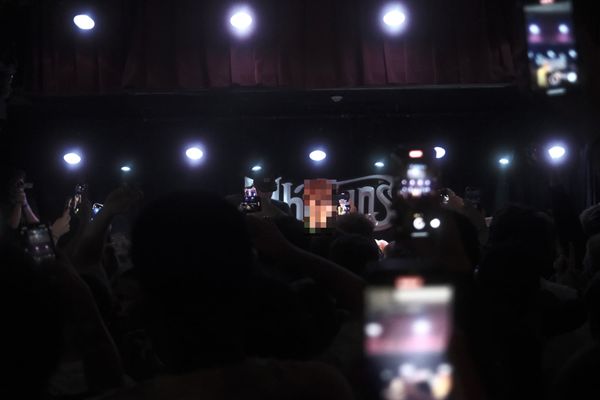
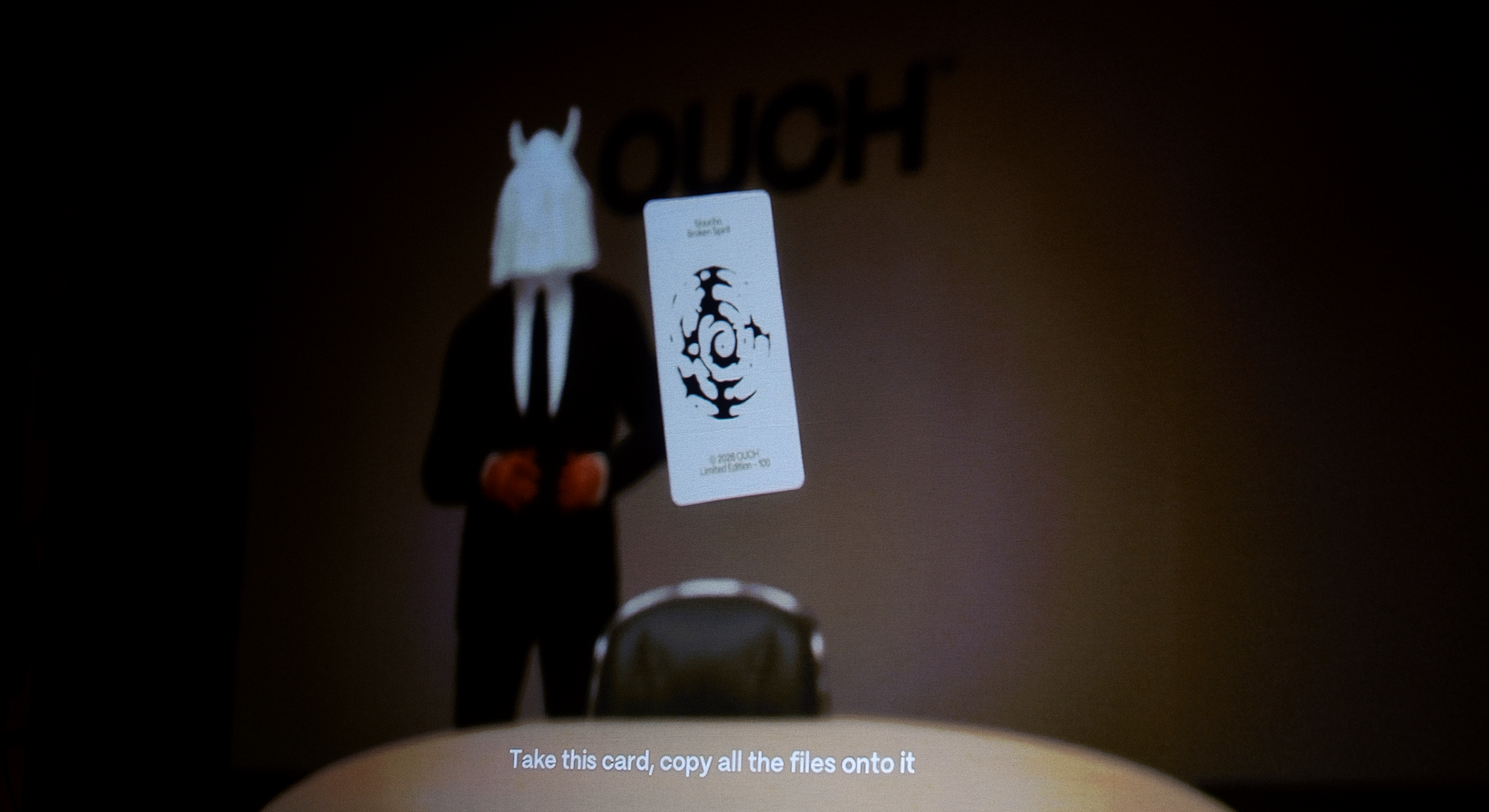
It's been a few months. What have I been up to? Honestly, updating the site hasn't been top-of-mind, although some gears are turning for Fourth Best — but lately I've been hitting up more gigs and the bug is catching up to me again. There's a Curtisy interview that has been recorded and will be here once some bits are sorted. I'm heading down to Croílar in a few days, and you can expect a full report from there. In the meantime though, I put pen to paper on this article after a visit to the Kirkos space to see Sloucho's new project being born; an EP called Broken Spirit that was revealed track-by-track as the audience played through a video game about finding the songs, scattered around some sort of inscrutable corporate facility and putting them onto an NFC card.
The NFC card, of course, is a real item, in premium packaging that almost feels like opening an iPhone. If you pair the NFC card to your email address, the files are yours, plus demos to spare. The note on the website tells you: "Here is my offering, something that exists in the hands of the people, this project is yours, it belongs to you free from any algorithm, it is yours to do with as you please. You can download the project and listen to it locally either on mobile or desktop, the files are yours, sell them, pirate them, share them with a friend, their future is yours to shape."
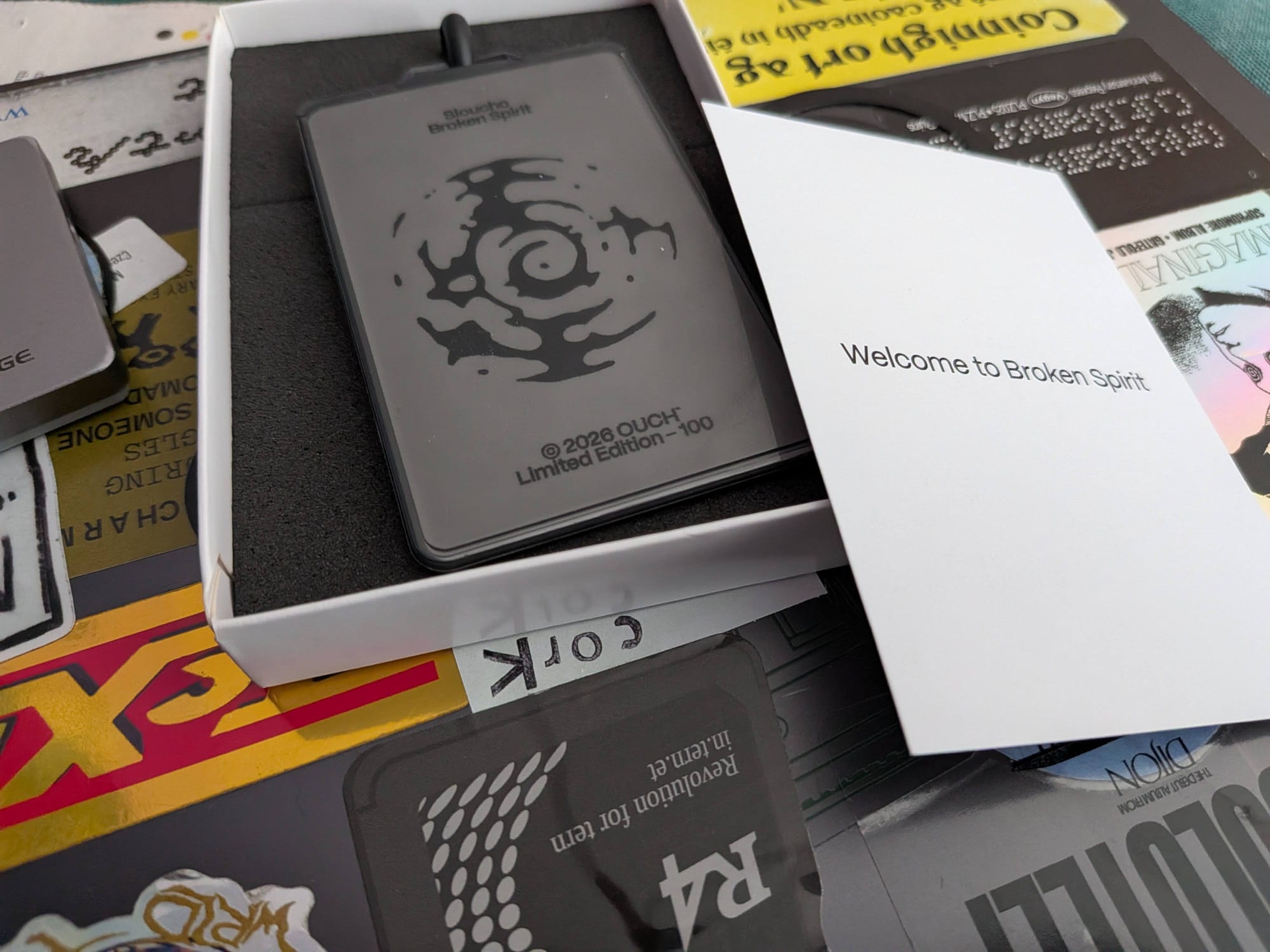
The name Broken Spirit is a clue to Sloucho's motivations. One of the characters in this game (as well as wider OUCH™ lore) is some sort of faceless, probably demonic CEO and even he's not above the worries that "the algorithm has been really tough on us lately". In the notes attached to the files on the card, Sloucho talks about trying to make something physical as a direct attempt to reclaim autonomy and some sense of hope. Over the course of the next six months, Broken Spirit will slowly tickle out to the world in the hyper-organised normal way that digital distribution tends to happen these days, but in his eyes, the thing is basically done; the real work is in getting it out into more physical spaces.
I like the Broken Spirit songs; I especially love the rap collabs with Crutch and Kibo that are instant additions to my USB. A lot of MP3s are being moved around from one container to another in my life lately.
You know which phrase I hate more than describing all new rap music as underground? It'd have to be content creator. As a noun it is used to describe seemingly everyone from casual poster to billionaire video mogul, wannabe influencer to video essayist to artist of seemingly any shape or form. I doubt anyone likes it, but people use it as self-description regardless. The discomfort is obvious; has been written about how the word "content" implies the container, the feed or format that is being optimised for; and I think that my discomfort with that optimisation is kind of the whole point of Fourth Best. We have a word for optimal content, pure form over aesthetics - we call it slop.
I bristle a little when people call the blog or email newsletter you're reading this from "a Substack" - not just because I deliberately avoided the Substack platform while creating it¹, but because it too implies that what I'm making is something that would be optimised for containment in the Substack ecosystem. The things I want to be are closer to writer or essayist or blogger or if I could be so lucky, journalist. I'm sure it's been said before on this website, but I want the work to be able to stand apart from the nature of how it will be found; to step away from the internet's constant slide towards ephemerality and provide lasting context to a future generation. I want to live in a world where if anyone cares, there's a digital paper trail that will lead you right to the things I care about. If someone lands here looking for one band they remember from a decade before, maybe this will light the way to many others that we care about now. So let's pick one more aspirational noun - archivist.
¹ It's not only that Substack is full of Nazis, but that doesn't exactly help their case. This website is powered by the paid version of Ghost, although I might some day choose to self-host.I grew up in the aughts with three much older brothers, so a lot of my shared culture with them came swapping hard drives. In the days before broadband, music would land into the house when they got back from college. I learned to love music by sweeping through gigabytes of the stuff, finding the things I cared about almost by random chance, knowing exactly where I was on my summer job an album would catch me completely off guard, turning my life around from a near randomly-synced iPod Touch hooked up to someone else's stolen music. What ended up in my hands was likely second-generation - one can assume the library I got was the product of trading that happened up in the city, and nobody could actually explain to me how someone ended up putting braveheart - freedom speech.mp3 in there.²
I wasn't joking about the Braveheart speech.
Not that I didn't know how to steal myself; I can think back far enough to selling burnt CDs in primary school with tracks ripped off LimeWire, having to issue a refund because I accidentally grabbed a censored Eminem tune. As time went by though the processes got more sophisticated; I didn't succeed all that much putting up solid torrent ratios on rural broadband, but it was never particularly hard to find a MediaFire or Zippyshare link for almost anything. Days on end spent carving out my own library, a particularly manic weekend hunting total perfection on the iPod getting all the cover art lined up.
I know 100% in my heart and soul that I wouldn't be someone with a frankly upsetting amount of my money sunk into tapes and vinyl, gig tickets, festival tickets, flights abroad, Patreon memberships, and all of that — NFC cards even — if I did not get the bug by stealing vast quantities of music. Yet even before I remember stopping in my tracks the first time I heard Sufjan Stevens' Illinois with literally zero context because I had randomly chosen to put it on my iPod one summer, I think there's a deeper root to it; with my communion money I got the cash put together to buy a PSP, and someone told one of my brothers to get me a decent memory card for it. At the time I thought that was odd; I already had a memory card, and how much save data was I going to actually need? Then of course, the pieces began to line up; hanging out on forums following hacking guides and ending up filling those memory cards many times over with copies of games I had no hope of ever affording.
More than that; getting exposure to little details about cybersecurity and how systems get exploited, using weird free open-source tools, hanging out on IRC channels and even time to time talking about music with people out on the far ends of the internet; listening to some Swedish guy's Björk remixes put together in FL Studio. I pirated that too; but it never clicked. Occasionally I wonder what life would have been like if I forced myself to get into it, developed a fluency for making music in the tools that would shape the generation ahead. Alas, that's a road not taken.
The thief's thesis should then be "why did pirating music make me love the work, and yet I can't find the same joy in streaming music — skipping past all of the labour of getting the stuff in the first place and arriving directly at the perfect library"? And that's a complicated question. It is clear that streaming has, even in enthusiast circles, taken the wind out of pirates' sails³. While I bring much more money to the music world through buying gig tickets, vinyl, tapes, digital downloads and merch than I do through streaming subscriptions, it's also true that I don't necessarily have a matching digital copy of everything I have a physical copy of, because the streaming platform has become the Big Collection, simple as. Even the stuff I buy I probably end up streaming, and that means I'm in for a shock when all of my download cards stop working some day.
³ It is also true that streaming has made it easier than ever to steal music, but with a substantial caveat. You can pull lossless audio directly off of a service like Tidal with the right tools, even if you don't have an account with them. But in many ways, this hurts the archival quality of music piracy; people rip music when they need it, treating it as a centralised library rather than a decentralised one. And without decentralised libraries, it just takes someone pulling their music from streaming to make it harder for even the savvy thief to get their hands on it.When Spotify's service degraded to the point of total annoyance of a sizeable portion of its user base, from a product point of view the solution for most people was still "use another streaming platform" rather than "buy all your music", even rather than "steal all your music". Could you imagine finding half of the stuff I cover on a torrent site? Hell, Sloucho implicitly encourages you to pirate Broken Spirit, but at time of writing, it's not on slsk.
But if you insist...

Right.
Where were we?
Ninajirachi's tour behind her record I Love My Computer might seem like a rather unlikely subject for Fourth Best. For one, it's very much Australian music, and for another, it proudly wears the badge of EDM, the much-maligned commercial prong of dance music that dominated airwaves in the 2010s. However, I'm not the first to note that the wall between commercial and "underground" dance music has eroded to paper thin; I've heard someone say that we're in a world where Skrillex is playing Dekmantel and Ben UFO is playing Tomorrowland. Nina's appearance on Derrick Gee's Solid Air is worth a listen to really drive that point home, as songs by Tristan Arp and Madeon share the same hour of airtime.
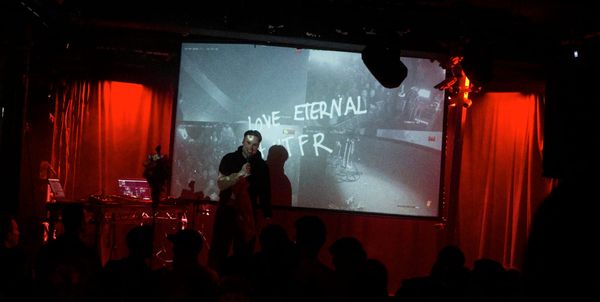
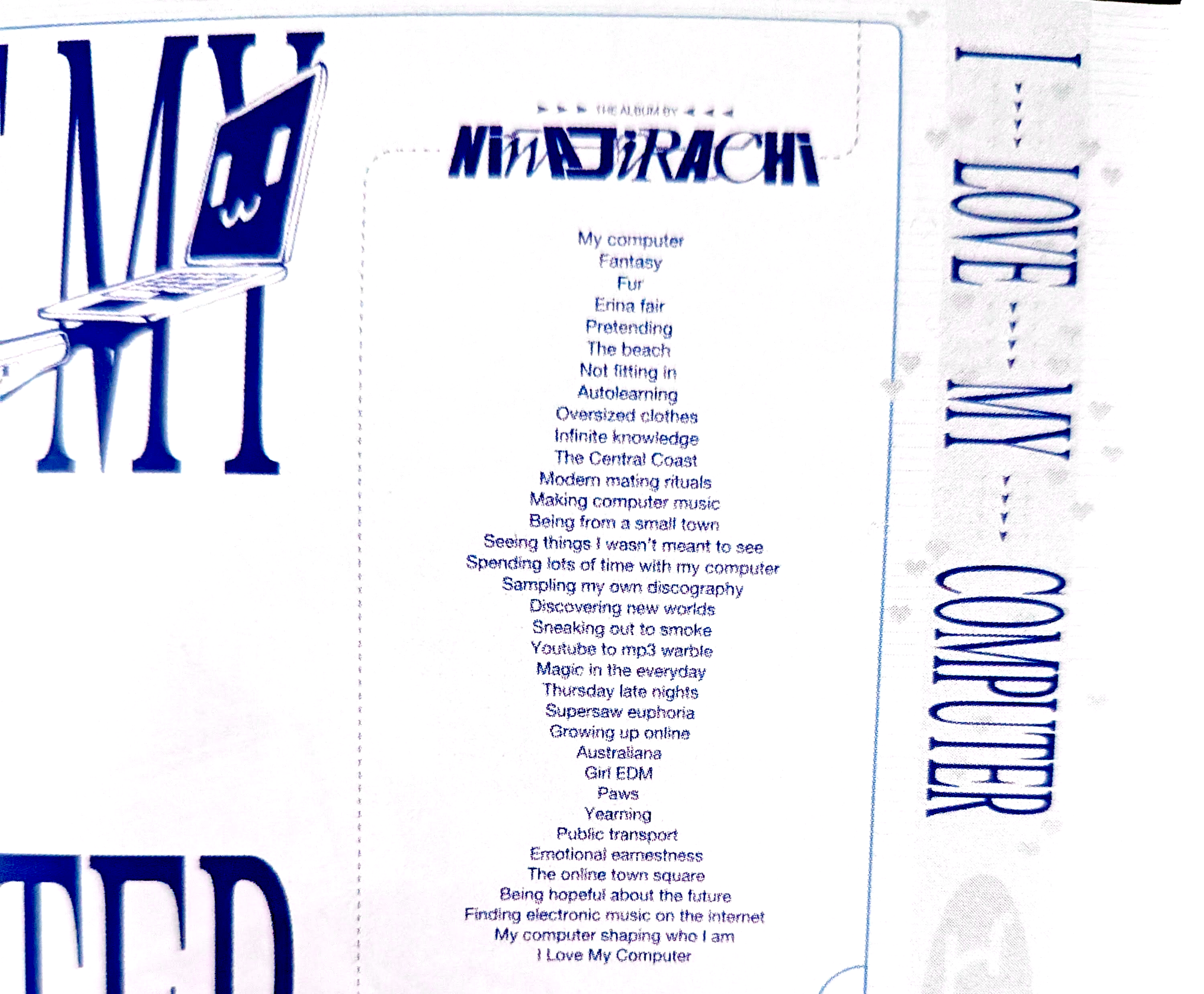
I adored Ninajirachi's Dublin gig; it felt earnest in celebrating the euphoria of the digital world, and one that captures the weird paradox of small-town high-speed broadband flooding an isolated life with the infinite beyond. The liner notes for I Love My Computer includes a list of themes that feel like a manifesto for the project, ones that feel like they overlap with the weird feelings I've been trying to summarise here; a desire for a return to the lawless days of general-purpose computing, for good and for ill. She is playing to packed rooms worldwide that all come from this same digital culture, that all feel some sort of connection to mp3 kitsch, that all are trying to just find community in shared love of music. If the internet as we know it decays and falls over, I now feel a bit more assured that there'll still be room to rebuild it.
I've really started to believe that rural spaces are more online than urban ones, even if the way that most clearly manifests in reality is fascist brainrot taking hold in towns with not a lot else going on. That record and the reaction it's been generating seems to align more to my experiences of living with the Computer at the centre of my life with music, even if I never learned to make it.
Yet even in those days when I was posting things on Twitter that I'd no doubt look back and cringe at, the people I ended up talking to about music, the sorts of stuff that I was playing when I was trying out streaming radio for the first time, I definitely had room for some local obsessions as well.
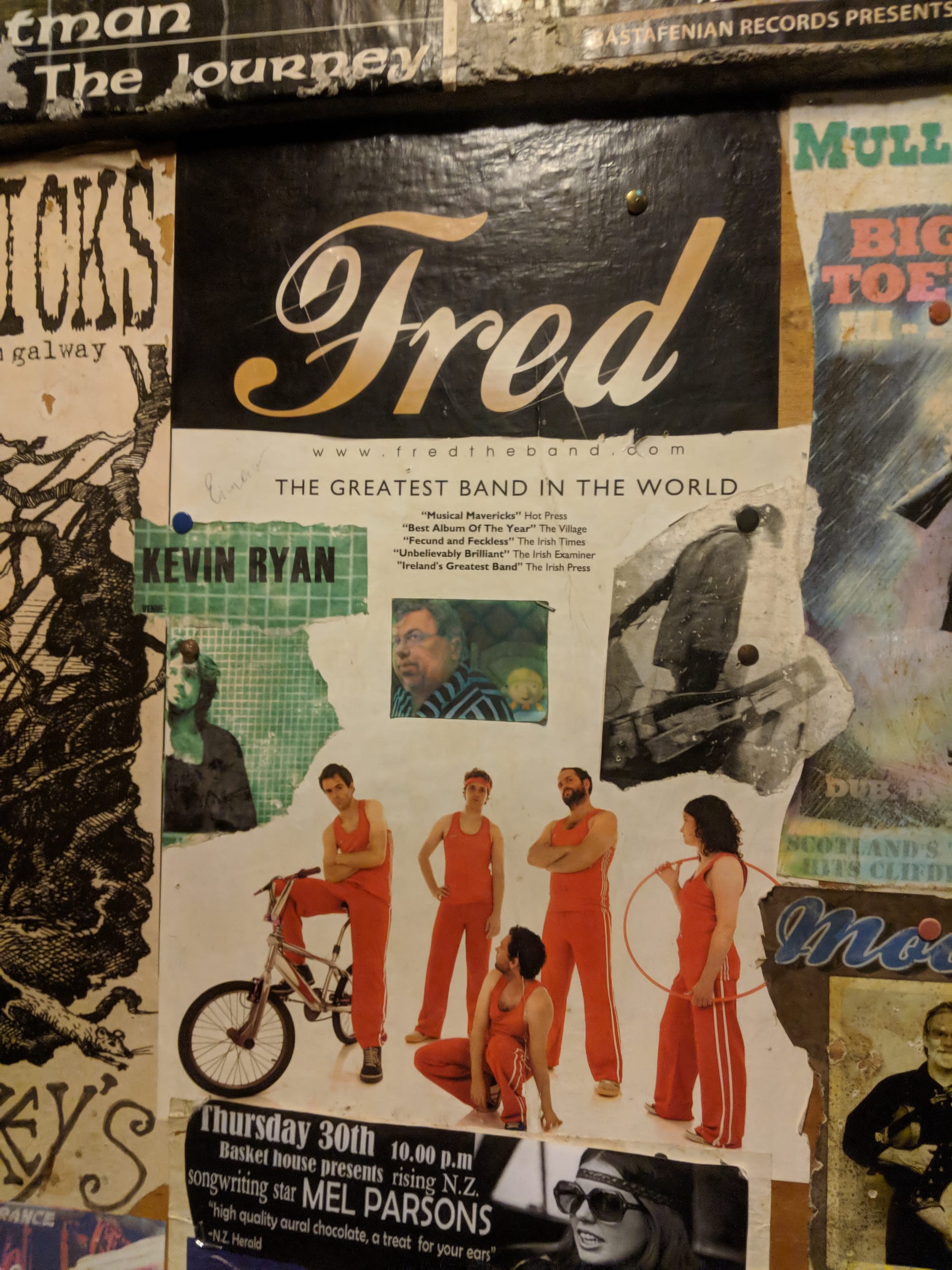
Insufferable Cork City indie millennials (and I'm in that category for better or for worse) were once incapable of shutting up about Fred, the band that defined the aughts in many a venue across the city. They were a big deal for me growing up, from one of my first proper headliner shows through no doubt a handful of plays in my college radio days. Their music has also vanished from streaming in the fifteen(!) years between their final album and today. I definitely had CDs of theirs, but no idea where they are now, and if I wanted to get back to them, there's a handful of YouTube fan uploads of their last two albums and little else to their name online.
Then, a few months ago, a friend of mine was complaining that his college radio show was getting copyright takedowns on Mixcloud and he was terrified of what might have happened if he didn't have his local copies. I don't have copies of any of my old radio shows! While that conversation was ongoing, I stumbled upon an extremely cool-looking free and open-source fileserver. A couple of weeks ago I bought some cheap hardware; a Raspberry Pi, a SSD, a little case for it. I set myself up with that file server, a local Google Photos clone, gave my other little projects like the Ticketmaster resale detector and the Fourth Best Discord's RSS bot somewhere to live... slowly getting a sense of how to build the infrastructure.
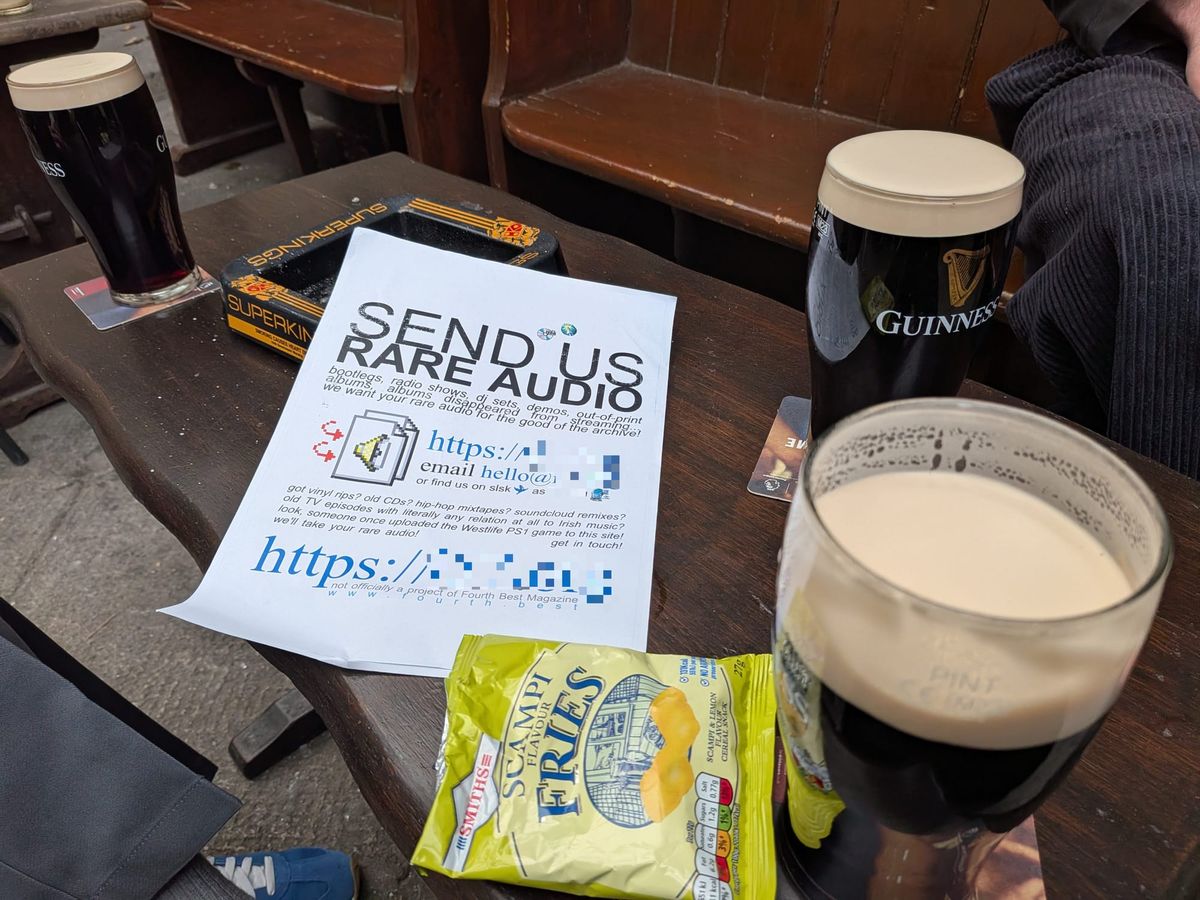
Finally, I set up the fileserver, and a couple of weeks ago I started inviting people on Discord servers and Instagram stories to start posting rare audio to it. It's now at about a hundred gigabytes; brick by brick from a handful of substantial donations of the contents of hard drives and cloud backups from near and far.
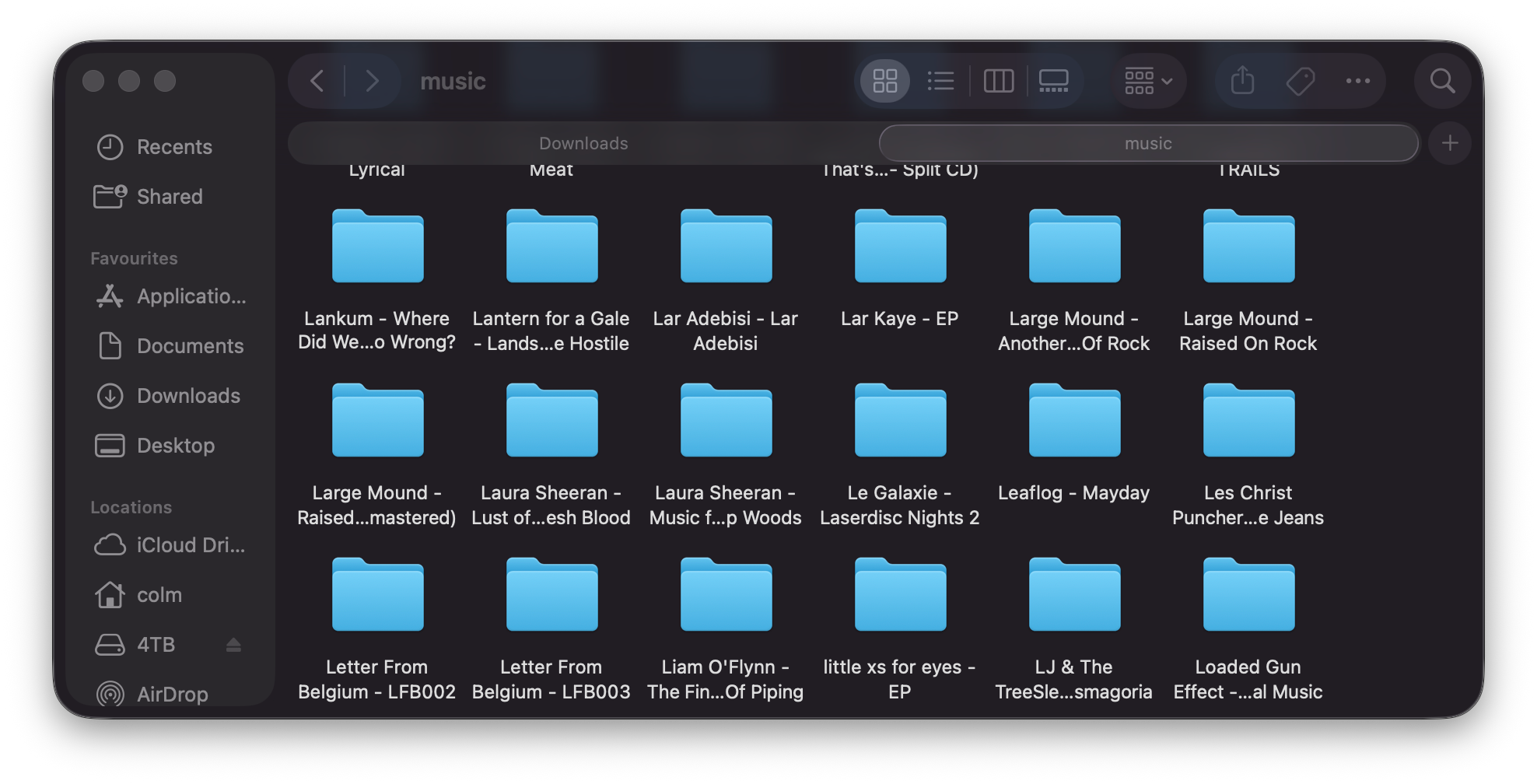
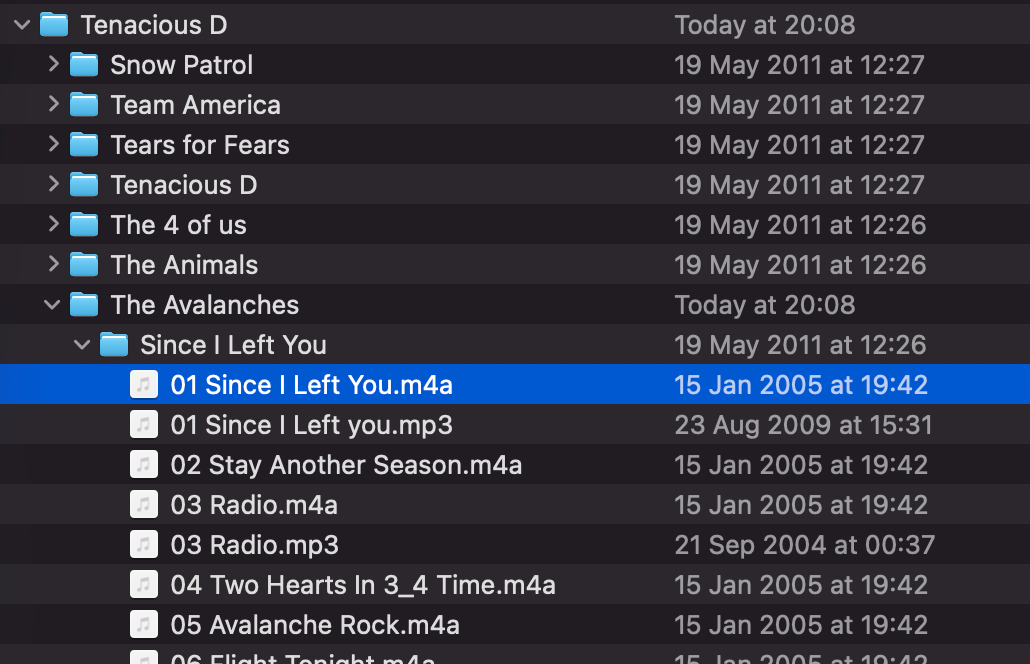
It's not exactly a project of Fourth Best — many people who I would like to maintain good relations with would likely take enormous umbrage with a large public archive of their copyrighted material — but it's not exactly not part of this wider project. In truth, this story is unfinished. I can feel the Archive taking up months of my time, diving into it and figuring out what stories it has to tell, finding new stewards and homes for the stuff that truly is at risk of getting lost, figuring out how to do this both thoroughly and ethically. A lot probably should be deleted for the simple fact that you could still arguably go out and buy the same from a still active band; a lot more is stuff that is completely missing from the surface web and deserves to be protected. And a mountain of more and more interesting stuff is landing every day.
Its scope is impossible to pin down. I've copied every single last one of Skelly's bootleg recordings. An early contributor shipped me Irish translations of Pokémon Red and Blue, who's author seems to have vanished, and I couldn't make a case for it not belonging here. One reader was perplexed by my acquisition of "esoteric small circle Kildare bands demos", another telling me that they'd been looking for a particular live recording for years. One of the first contributors has even promised me a vinyl rip of a lost 4th Dimension project.
Notably, multiple contributors have offered me copies of the very first files I ever downloaded from Soulseek. I remember when I first tried it out, someone trying to explain the protocol to me, promising that in its nodes I would find every piece of music I would ever ask for, no matter how to obscure. I remember my guitar teacher in Irish college down in Knockadoon telling me about his post-rock band, and I could never find his music anywhere. The name was, to say the least, generic. ("Sideproject"? Really? There's another band called Sideproject still on the go!) Someone told me about the filesharing network that had everything, so I searched for something I never thought would be there. And somehow, those files stared back at me. This morning I fell down, and look at what I found. At some point, those files took an opposite journey to some others - actually making it to streaming and seemingly still staying there - but the MP3 hoarders don't need to know that detail.
I know now that the promise of saving everything is too much to ask for — but maybe we can carry the things that shaped us. It'll take effort, it'll take time, but we'll get there.
Obviously, I ended up finding those Fred albums again, too. I haven't listened to them yet. I skimmed through files while writing this and I get the sense that I'll like them less than I used to, but the first couple of seconds of each file I open put me firmly into the distant past. Nostalgia just might be a dangerous thing, but maybe we can squeeze some good out of it.
The one thing I know that I want to do with Fourth Best this year, but have not really made much headway on, is putting it to print. Taking the first two years of the site from webpage to paper and editing the whole thing into a single coherent thing. Fourth Best has never been an enterprise that makes much sense; I don't have content plans or regular updates, I don't have anything to say to the vast majority of people who email me, I've been struggling to put some pieces together.
And I can't guarantee I can write new material while I'm putting that Big Edit together. A lot of it will need updating! Remember in The Fourth Best View on AI where I said "LLMs are a most frustrating programming partner and do their best work scribbling in the margins and working as a kind of predictive text for repetitive work"? My day job is now completely unrecognisable to what it was when I wrote that as a result of advances in code generation but AI music is still unforgivable. There's a few edits like that to be done, while sewing together articles that call to each other published months apart.
In spite of this, I know that I have to put the magazine together, put some shows on to release it, look into how far I can take it independently as one guy with a day job who can't drive. One of the biggest inspirations has been everything we're talking about here - the value of archival and the desire to leave something behind for future generations to know what we cared about, the things that have driven the Fourth Best project from when it first kicked off.
The other big source of inspiration is that so many other people are doing it, and making it work. The gig/tape/zine series BLAB and the James Hendicott-fronted collection Intervals both landed after I started putting together pieces for my own print project.
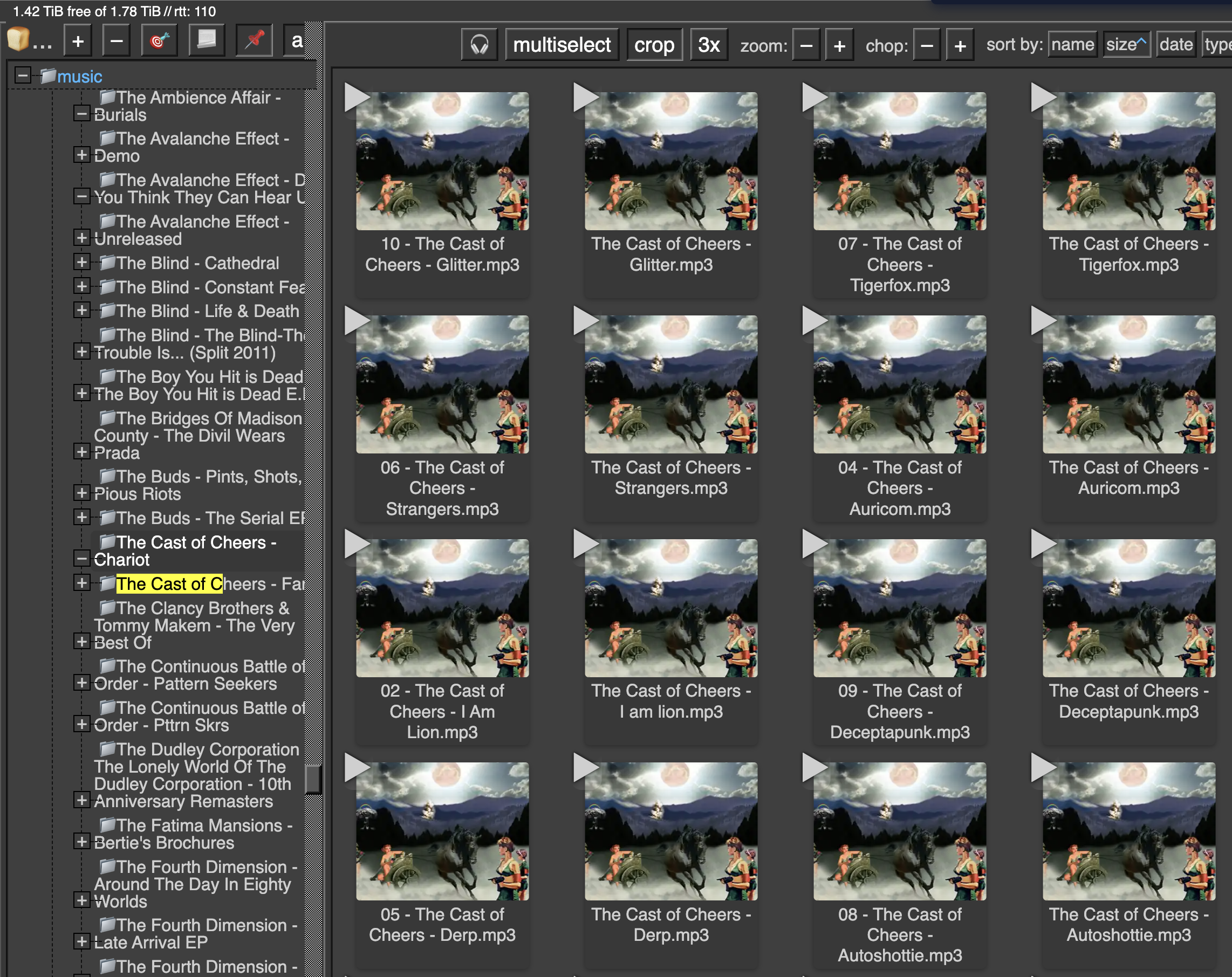
One of James' own pieces from his magazine kicked this article into gear yet again. Ireland's Great Lost Album, talking about The Cast of Cheers' Chariot. A breakthrough album from a band that captured a moment in Ireland's math-rock zeitgeist (back when a surprising number of people listened to math-rock that wasn't Canadian), that vanished when they showed up on a label with a "debut" record to push. The band themselves vanished soon after. I remember loving that record and being baffled when one day it just wasn't there anymore. It should have taught me to be a lot more careful with my hard drives, but some lessons need to be learned over and over again.
For James, the record was one that allowed him to connect to the Irish music scene as a new arrival to the country; a decade and a half on, he's probably interviewed more figures within that scene than anyone else.
Talking about the magazine on the Fourth Best discord, someone asked me to shoot them a link to the Chariot files if I ever found them. I did one better - that's when the server was first set up, bringing my weird desires to get more digital and get more not-digital into something with one record in the middle. When a copy did find its way through my door of Hendicott's article, I couldn't help but feel it's an apt place to take the story. One detail that it pointed out is that the album had a surprisingly high illegal download count for a record that was released for free over on Bandcamp - ultimately that might have been the quirk that saved it from disappearance. "Listen to Chariot", James advises, "it'll take a bit more work" even just to find it.
Let me do some of the work for you; and if you fall down, tell me what you find.https://i57.org/music/The%20Cast%20of%20Cheers%20-%20Chariot/
(and maybe, just maybe, see you on the Discord.)