on being the small-town critic
an interlude before the fourth best album of the year piece

I'm not posting about this article on social media. I'm not even sure why I'm posting it at all. I could very easily be alone on all of this. You're just going to have to trust that I'm trying to come at it from a good place, and we'll see where this road goes.
This year, one of my most anticipated Irish hip hop albums had a moment in it that is so dissonant, so clearly out of key, so clearly put together wrong and so clearly not intending for that sensation, that it made me stop listening to music for the rest of the day. I got the press preview, was buzzing to have it, and then for months I never finished the record. Up to that visceral sound I was enjoying it - it has its wonky moments but they all felt like they were part of the rapper & producer duo's idiosyncrasies, but then the moment hits and all I could think was "you've been making music for this long and you didn't hear this?"
The producer of the album has two Choice Prizes under his belt by the way! (one as a rapper, one as a producer). Throughout his work behind the boards (including the record that won the Choice) I've from time to time felt the same unsettling sensation of something that truly, honestly, just doesn't work. This is the critical risk - nobody expects a one take slam dunk, but it's another thing to be shooting airballs over and over, a decade and change in and having proven that you should know better - to be honest, having something of a reputation for not doing that. There are real high points on that album, on that song, even. It is a beloved, beloved, beloved album. End of year lists, reviews calling it "near flawless" and I cannot cross the threshold.
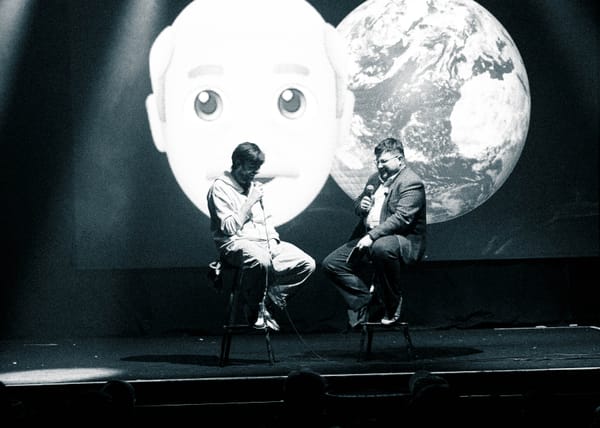
I will not be the first person to say that the bar is too low in Irish hip-hop. It's flat out true. That doesn't mean that I've been hyping anything on Fourth Best I don't fully believe in, but God knows it's not even the first time I've hinted at this on the website: there have been countless names that have always skirted by because they have visible potential. I have been guilty in the past of standing by music that my heart wasn't fully in because I could see where it could go rather than where it is. It's one of the things I talked about with Dylan Murphy in public last year:
I kind of struggle to to want to be negative about music here in Ireland, because so often you just know these guys. You'll see them in the smoking areas, like.
Which was neatly summarised by Leo Troy over at i'll do it tomorrow:
To criticise these artists, most of which still have a day job, feels wrong. Irish music in general needs a whole push just to get a smidgen of attention from an outside audience, so to critique the few that don’t impress you feels uncomfy.
I'm not going to diagnose a fault in the Irish psyche at large, but over the weekend, I was talking to a friend of the site who's been in the trenches of the food industry, asking me if I'd heard anything about the disastrous-sounding restaurant based out of the rooftop of a WeWork, Díon. "All The Food gave it a bad review. Do you know how hard it is to get All The Food to write about anything in a negative light?"
As I try to figure out the critical perspective of Fourth Best, something that I think needs to be held in high regard is that you have a right to your bad art. Only by struggling through iterations of work that we feel lacks a certain something do we ever touch the sublime. I've kind of danced around this idea in The Fourth Best View on AI: the damage that can emerge from removing fluency and expression from music, removing all the sharp edges and leaving something smooth and generic. The greatest sin is boring, as Matthew put it. To make something ambitious that ultimately feels bad, something aggressively weird that nonetheless misses the mark, is a thousand times closer to a masterpiece.
Like, yeah, maybe that's what I tell myself as a music blog that posts six times in a good year, where a post is formed over the course of ages, stifled by my horrible sense of perfectionism. Ultimately though I'd hope someone who doesn't like what Fourth Best has to offer can say that to my face. What I'm nervous of is when nobody plays the critic, we stifle people from ever achieving the potential that we're trying to protect.
When I listen to Ode To The Ancestors by God Knows I'm struck by the weight of the song in the moments leading up to that sound - a true story of colonial brutality, as one of his ancestors is beheaded and brought to display in the British Museum. Its call for justice and rebellion rings strong, even if the rest of the song is fighting itself to be there. It is more than just potential worth protecting. This is a voice that by all accounts has been in his prime for years. One of the first voices in Irish hip-hop I felt true hope for. On the album there are things he's doing that deliver on all that promise. I can't even say I don't like MuRli as a producer, in fact I think that in live or collaboration settings his arrangements absolutely kill it. So calling it out makes me feel a little terrible. I just can't get past the block.
Let's make things worse.
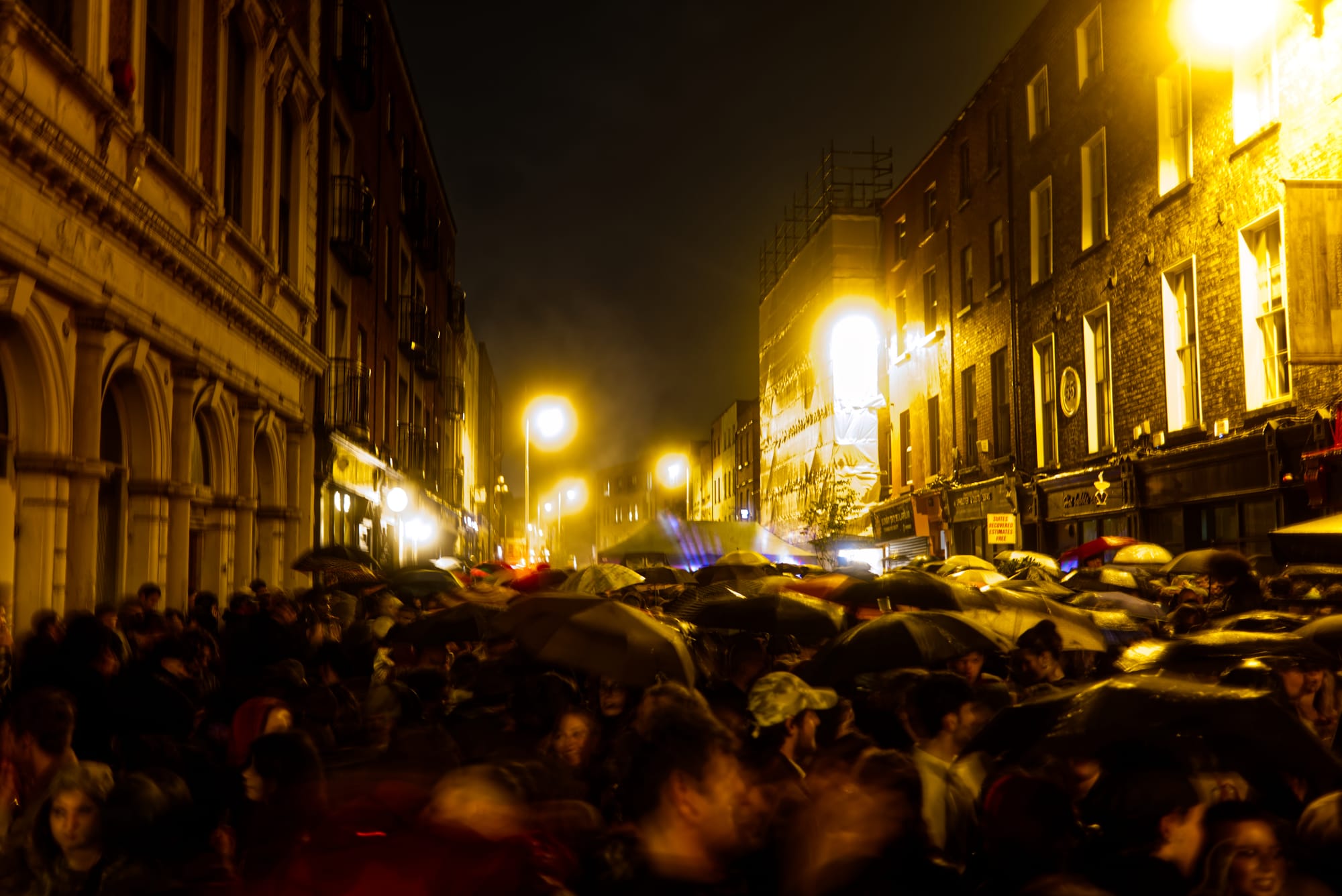
Culture Night in Dublin felt completely abuzz with energy - the disastrous rain did nothing to quell the crowds absolutely everywhere in the city. I started the night at a Dublin Fringe event that I have still been struggling to get the words out to explain. It completely defied any attempt for me to understand it - never mind as a commentator or a critic but simply as a human with eyes in my head to see.
Blue Niall's Oisín billed itself as an experiment in mixing hip-hop with theatre and Irish mythology. Set on three different stages in a room that could barely fit just one, hopping from corner to corner in the room with pauses between every song as the main performer explains exactly what is happening in the story at every point, that story all over the place taking wild leaps in settings and landing at an ending that seems to come out of nowhere. In its world, spéirmhná were rendered as "Celtic baddies", the Pellador-wearing emigrant as the "Paddy Daddy", there was an image of 2pac dressed as a revolutionary in the Easter Rising shown with no context other than "We never got to use 1916 2pac in this show". The entire time I watched it, all I could really say is that in its current shape it's not for me - it's really not for me - but fair fucks, the fella really went and did that shit. I promise I'm not doing the scale and imagination of this thing justice. We didn't get to the cyborg inhabited by the spirit of Eamon De Valera or the Ryanair planes with horses' heads. But all these ideas appear for seconds at a time and seem to vanish just as quickly.
The show was somewhere between four and seven years in the works, and some parts of it show its age (a trap song about feeling trapped in Dublin called Dublin City Trap, a song that references the debate on accents in Irish hip-hop which we can say we've long buried), while some parts show that there's more work to do, and this thought isn't out of the mind of its creator.
What am I to do with a story like this? A project bursting at the seams with a hundred different ideas all pulling its creator along for years at a time, unwilling, perhaps unable to stop or reverse, and some good ideas in the middle of it that could perhaps take flight on their own (one of the opening tracks has a fun twist on a sean-nós sample, with a gorgeous performance by Amano on the remix, and I wonder if there's more to be done there). I don't want to crucify anyone over what seems to be becoming their life's work, something that was played to a sold-out crowd that clearly seemed to have fun with it. I want big, weird, ambitious art that takes risks. I just want Irish music media that engages with that art and asks more of it.
No failure is final. Developing potential means facing those failures, even where it hurts. Ultimately I wish Blue Niall well, but as the journey to develop Oisín continues I wish him most of all that the day will come when he's happy with the work, can learn what works for him and what doesn't, and set out on another journey, more willing and able than before.
It had me thinking about the next generation.
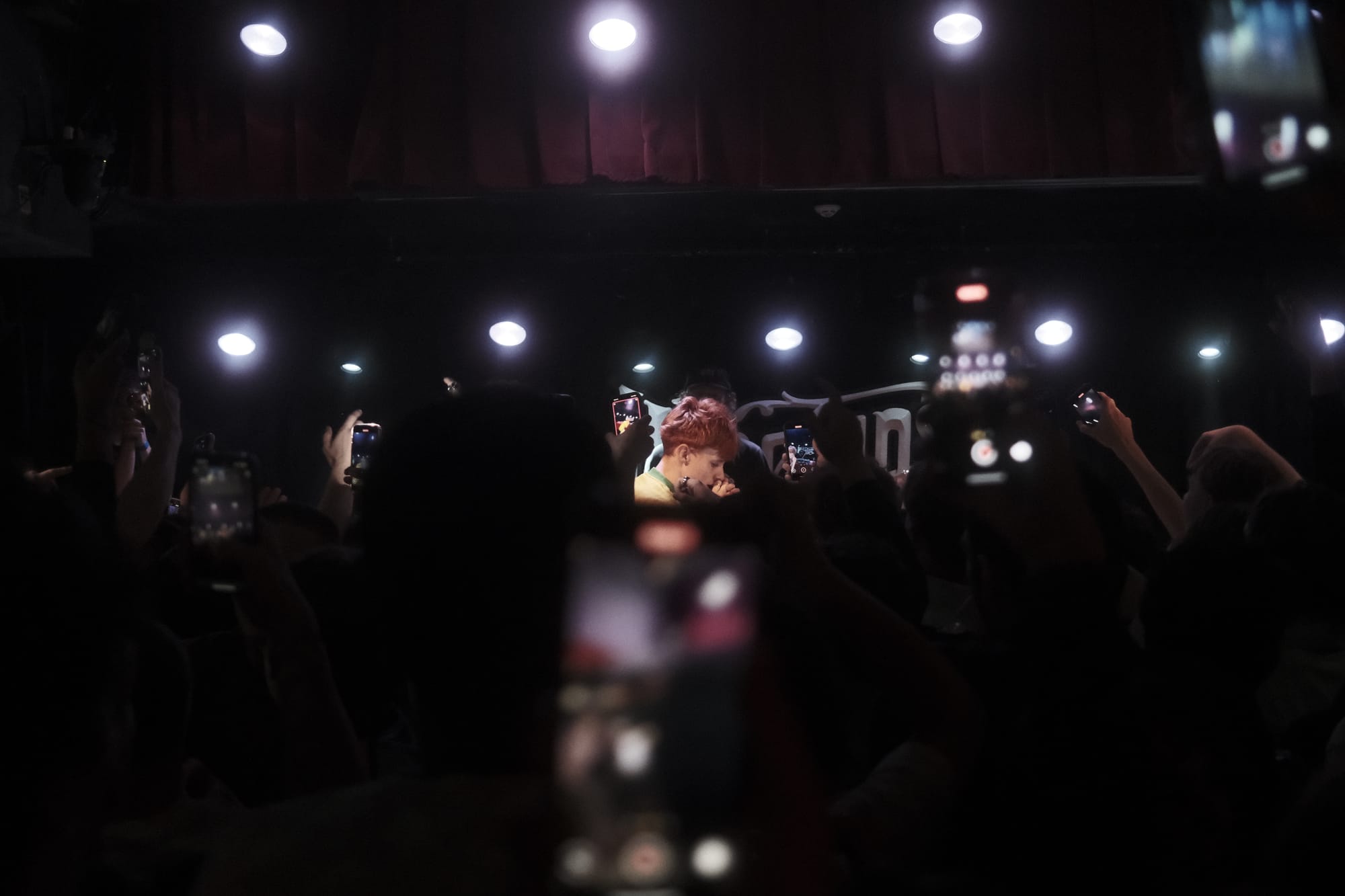
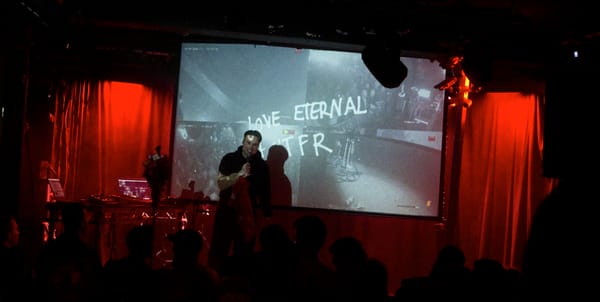
When deathtoricky played his sold-out debut headliner in Whelan's, I sat at the back with my Zoom recorder and my camera. I shot about a hundred photographs and I could count on one hand how many of them don't have an army of screens pointed to the fella, recording in progress.
He was not the Irish first rapper in what we're now stuck calling the "underground" — a terrible name for the nebulous set of scenes that bring the chaos of post-internet aesthetics to hip-hop, following the path laid out by drained-out luminaries and young beatmakers plundering all of post-Y2K culture all at once in a caustic remix — but his arrival nonetheless marked a moment where quality and algorithm synchronised, his music got to be everywhere, and through insane work ethic releasing multiple songs weekend after weekend, things began to snowball into a sort of chosen-one mythos, where everyone has something to say about his arrival.
I've talked to a lot of Irish rappers, producers, music fans about deathtoricky. They all speak about him with different angles - some are inspired by him, some see him as an avatar for a future of Irish hip-hop, some see him as the death knell for the scene as it stands. Things are quieter now, but in the weeks after the one-two punch of motives and breathing right it felt like his ascension was a runaway train, one that would either pull Irish hip-hop into a brighter, luminescent future or crash into everyone else in his path.
dtr comes from a generation where the only option now is to build in public, be ever visible while also keeping an enormous catalog of unreleased, and be primed to strike the moment the algorithm takes to you. From there, you cannot let up even for an instant - you have to ride that wave with ever more fuel, whatever the feeds can contain. It's hard to fault the kid for playing to the meta; he plays it phenomenally. He gets and uses attention without sacrificing the kind of perceived authenticity that allowed a baby-faced ginger fella from Kildare to make music that feels like it belongs not just our national conversation but something that can exist on the same terms even further afield. His right-hand man Cian Bolger has spent years perfecting a visual identity that exists somewhere in the middle of retention editing and lo-fi digicam haze, reflecting something that feels like the internet, both in 2011 and 2025 all at once.
I thought motives and breathing right were phenomenal, and there are glimpses of songs he has in the vault that are equally brilliant. Yet I've also spent very little time on his debut full-length #ikfly, something that, if I'm being cynical, feels like it exists just to have a full-length while the algorithm's spotlight is pointing at him. Talking to some of his predecessors, one told me "He has the same live show all the young fellas have, performing over the top of the master track, all bursts of high energy and getting out of breath". The official YouTube video of that Whelan's live show doesn't have the board audio, so it's walls of distorted, clipping 808s he's roaring over.
The artist continued: "I kind of wish I could mentor him on what he could do with a live show, what could set him apart even further, but I don't want to be seen as a hanger-on."
That's an understandable sentiment. It feels like the legacy music industry globally has pivoted to spending its days chasing the algorithm, signing most-viral-teenagers to struggle deals, burning the candle at both ends while they still have that air of success. I think that in turn exacerbates the situation in Ireland, where hype cycles are getting much faster and weirder. I'll never forget that one TikTok about him; "I've actually spoken to many of my favourite artists, musicians, tastemakers in Dublin in the past while... we're all in unanimous agreement..." Convenient!
You could say it isn't a hip-hop problem. I think a lot about the fact that Madra Salach have two songs out and seem to be the absolute talk of the town. I've been hearing it long before they had any music out! They're a talented bunch of musicians and I do love their takes on Irish folk staples, but the two singles they have out feel like they're the start of good ideas and not good ideas all on their own. Blue & Gold paints a vivid picture at first but I never feel like it lands anywhere, and that other song spends half its runtime doing the same instrumental passage over and over with no movement, no energy, no development, just filling the space. In recent live performances the frontman is just playing with a noise pedal doing nothing of much interest during that passage; like it's more that they want to do the Lankum thing than do something that serves the song. They have potential and they have attention so I hear their name a thousand times a month. They'll do some version of the same showcase gig circuit The Mary Wallopers did — catch them in Barcelona this June — and seem to be repeating their success story beat-for-beat. Some of it is classic word of mouth but some of it feels like we're making much so ado about the beginning of something. I think we get too caught in those.
Still, I feel like hip-hop, a genre permanently tied up in the idea of hype cycles and seismic generational drifts, is where this is going to play out most. I do think a lot of the new generation on the come-up have their hits, but the ratio of hits to misses is all over the place; dropping huge volumes of work and letting the public sort through it to figure out what sticks. Sometimes it's worth the digging - shout out to C2 - but for a lot of this scene, even its OGs who've been around forever and playing its biggest shows, I can't help but feel like things feel fragile there, that there's no worse place to have to learn the trade than deep in public eye with a hundred phones pointed at you.
Is it going to be worse when one of them's held by a blogger with notions of being a small-town critic? I'd rather it not be.